


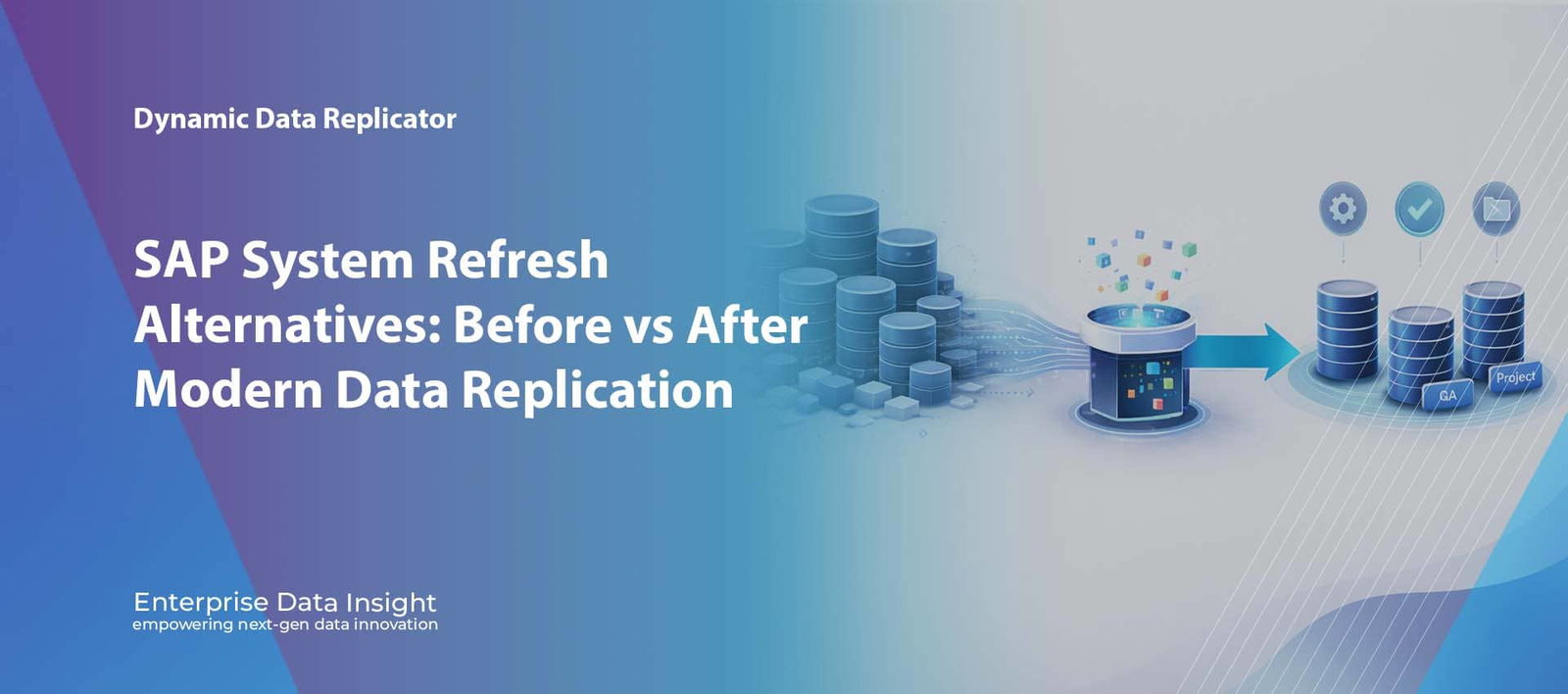
SAP System Copy Alternatives: The Powerful Shift Replacing Traditional SAP System Copies
Before vs After: How Modern SAP Data Replication Is Transforming System Refresh
SAP System Refresh Alternatives are changing how organisations manage non production environments across complex SAP landscapes. For many SAP organisations, refreshing non production systems has traditionally been one of the most resource intensive activities performed by SAP Basis teams. Development, QA and training environments must be refreshed regularly to ensure project teams have realistic data for testing, configuration and development. This article shows why SAP System Refresh Alternatives are becoming increasingly important as organisations move beyond full system copies and adopt selective replication with DDR.

Why SAP System Refresh Alternatives Matter
Large SAP environments have grown dramatically over the years. What was once a manageable system copy operation can now involve multi terabyte databases, long refresh windows and complex post copy activities. As organisations move towards cloud platforms and RISE environments, these challenges become even more visible.
This is where the difference between traditional system refresh methods and modern selective data replication approaches becomes very clear. The objective is no longer simply to refresh an environment. The objective is to refresh it in the most efficient way possible using practical SAP System Refresh Alternatives.
Modern SAP data management is shifting away from full system refresh and towards selective replication, smaller target environments and faster delivery for project teams.
Before vs After: SAP System Refresh Alternatives in Practice
Full production sized refresh, large duplicated datasets, extended downtime windows and high Basis effort across the landscape.
- multi terabyte environments copied in full
- long planning and scheduling cycles
- significant post copy activity
- large infrastructure footprint
Smaller targeted datasets, reduced disruption, faster refresh execution and stronger alignment to actual testing needs.
- selective business object replication
- minimal environment disruption
- smaller non production footprint
- refresh completed in hours not days
Traditional SAP System Refresh Alternatives Start with Understanding the Old Model
For many organisations, the standard refresh process still relies on a full system copy from production. The process usually involves production database export or backup, transfer of large data volumes to the target environment, database restore, system configuration adjustments, post copy automation tasks, and data scrambling or masking activities.
For large SAP environments this process can take many hours or even multiple days.
- large storage requirements across non production systems
- system downtime and scheduling complexity
- lengthy preparation cycles before refresh
- high operational effort for Basis teams
The Modern Approach: SAP System Refresh Alternatives Through Selective Replication
A growing number of organisations are now moving towards a more efficient strategy based on selective data replication. Instead of copying the entire production system, modern data management solutions replicate only the data required for a specific testing or development scenario.
This approach is made possible through solutions such as Dynamic Data Replicator. DDR allows organisations to replicate specific SAP business objects and related data structures directly from production into non production systems. Rather than transferring entire databases, DDR focuses on the relevant business data required by project teams.
DDR supports SAP System Refresh Alternatives by replicating specific company codes, selected plants, defined material ranges, customer datasets and recent transactional data while maintaining referential integrity across SAP tables.
Real Technical Impact of SAP System Refresh Alternatives
When organisations transition from full system copies to selective replication strategies, the improvements can be substantial. Many organisations report database size reductions of 40 to 70 percent in non production environments.
Example:
- Production system size: 8 TB
- Traditional QA, DEV and Training footprint: 24 TB
- DDR based subset footprint: 6 TB
This can result in 75 percent less storage consumption across non production landscapes.
Project Speed and Delivery Improvements
Beyond storage savings, selective replication significantly improves project agility. Instead of waiting days for a full system copy, project teams can receive the required datasets much faster.
A testing team requiring sales order data for a specific region and company code no longer needs to wait for the next scheduled full system refresh. With DDR, only the required business data can be replicated in a targeted refresh operation, allowing testing to begin immediately.
Data Security and Compliance
Another important advantage is the ability to protect sensitive data. When production data is replicated into non production systems, customer details, employee records and financial data may need to be protected. DDR supports data scrambling during replication, ensuring sensitive information is anonymised while maintaining the structure required for testing.
Key Benefits of SAP System Refresh Alternatives
Organisations that adopt selective replication strategies consistently report:
- 60 percent smaller non production databases
- 70 percent faster refresh cycles
- significant reductions in storage infrastructure costs
- improved project delivery timelines
- better alignment between refresh scope and business need
A New Standard for SAP System Refresh Alternatives
As SAP environments continue to grow and digital transformation initiatives accelerate, traditional system copies are becoming less practical. The focus is shifting towards intelligent, selective and efficient data replication.
Solutions such as Dynamic Data Replicator enable organisations to modernise their SAP refresh strategies, reduce infrastructure footprint and deliver the right data to project teams faster than ever before.
Conclusion
In modern SAP landscapes, the question is no longer whether to refresh systems. The real question is how efficiently that refresh can be performed.
By adopting selective replication and practical SAP System Refresh Alternatives, organisations can reduce storage demand, improve agility and modernise the way non production systems are managed across the landscape.
For practical demonstrations of selective replication, SAP refresh strategies and intelligent landscape management, visit the Enterprise Data Insight YouTube channel.