

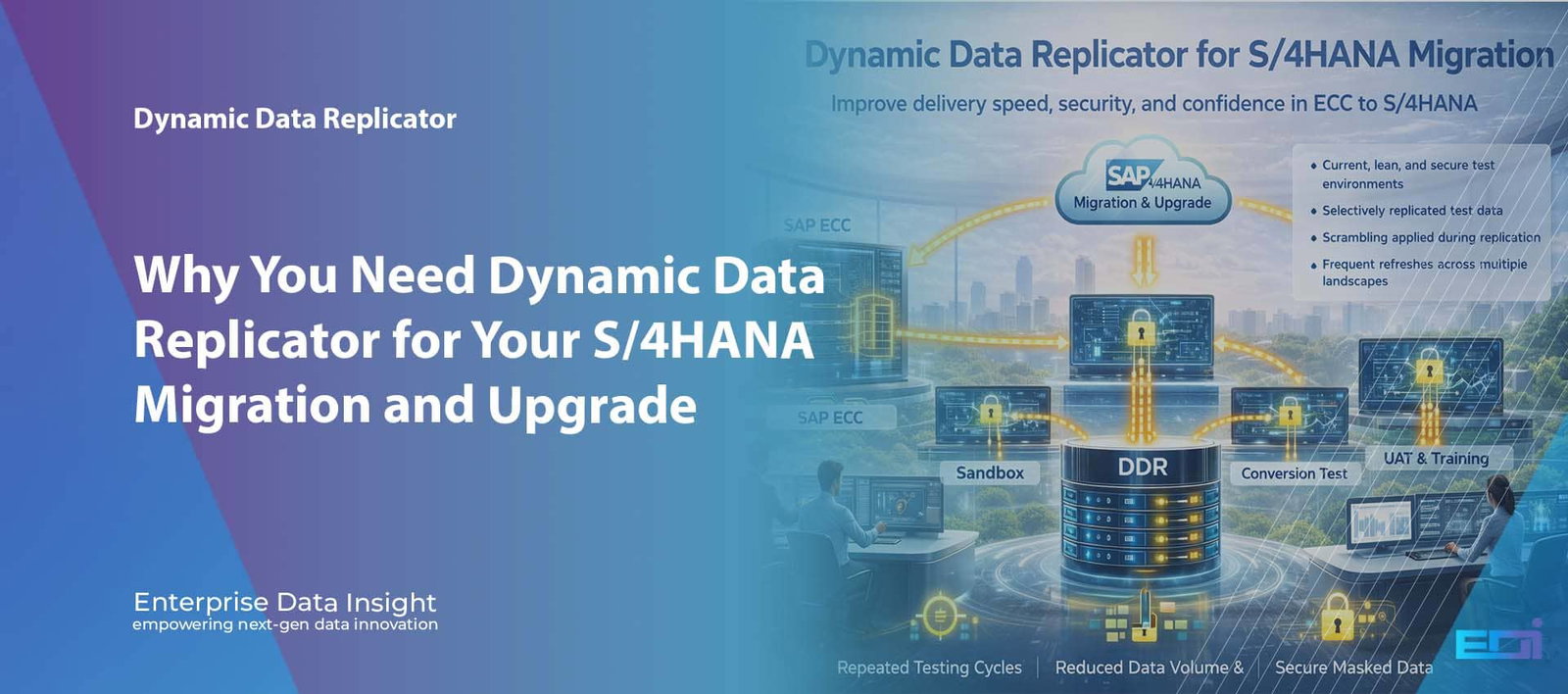
Why You Need Dynamic Data Replicator for Your S/4HANA Migration and Upgrade

Dynamic Data Replicator for S4HANA migration and upgrade
Dynamic Data Replicator for S4HANA migration is the missing delivery control in many ECC to S/4HANA programmes. When test data is outdated, oversized, or unsecured, teams absorb delays, rework, inflated cost, and late stage risk. This article explains why Dynamic Data Replicator for S4HANA migration improves delivery speed, security, and confidence across the lifecycle.
Dynamic Data Replicator for S4HANA migration supports repeated testing cycles
S/4HANA migrations are iterative. Conversion cycles, functional remediation, data consistency checks, and integration testing all require repeated test cycles. Each cycle depends on test systems that are current, stable, and representative of production.
Dynamic Data Replicator for S4HANA migration enables frequent, predictable refresh using consistent scope and rules, so each cycle runs on data aligned with production reality. This reduces compressed test windows, improves coverage, and lowers late stage pressure.
Dynamic Data Replicator for S4HANA migration reduces data volume, cost, and runtime
S/4HANA has a direct relationship between data volume and cost. Large datasets increase HANA memory requirements, infrastructure spend, and runtime. Oversized test systems slow testing and inflate programme budgets.
Dynamic Data Replicator for S4HANA migration supports selective replication by business object, organisational unit, and time period. This creates lean test systems that contain only the data required for testing. To quantify programme impact, use the SAP Test Data Management ROI Calculator.
Dynamic Data Replicator for S4HANA migration protects sensitive data during testing
Migration programmes frequently involve internal teams, partners, and third party vendors. Copying production data into non production systems without protection increases exposure of personal, payroll, and financial data.
Dynamic Data Replicator for S4HANA migration applies scrambling during replication, before data reaches the target system. This reduces compliance risk and supports stronger governance, while preserving functional integrity for realistic testing.
Dynamic Data Replicator for S4HANA migration supports parallel workstreams
Most programmes run multiple landscapes in parallel, including sandbox, conversion test systems, integration environments, UAT, regression, and training. Inconsistent data across environments leads to conflicting results, duplicated defects, and loss of confidence.
Dynamic Data Replicator for S4HANA migration allows multiple test systems to be created and refreshed from a common source using tailored scope definitions. Each environment receives data appropriate to its purpose while maintaining consistency across the programme.
Dynamic Data Replicator for S4HANA migration improves cutover readiness
Cutover is one of the highest risk phases. Teams need confidence that conversion steps, reconciliation, and validation work under realistic conditions. If systems cannot be refreshed reliably, cutover rehearsals are often limited or skipped.
Dynamic Data Replicator for S4HANA migration enables repeatable rebuild so cutover activities can be rehearsed multiple times using consistent data, reducing uncertainty and increasing confidence ahead of go live.
Why organisations choose Dynamic Data Replicator for S4HANA migration
No additional infrastructure required.
Business driven scope by object, org unit, and time period.
Sensitive data is protected before it reaches target systems.
Execution records support audit and security controls.
Conclusion: Dynamic Data Replicator for S4HANA migration reduces risk and accelerates delivery
Dynamic Data Replicator for S4HANA migration provides the test data foundation required for realistic, repeatable, and secure delivery. Selective replication controls cost, scrambling during replication reduces exposure, and repeatable refresh improves pace and confidence.
Next steps: review the DDR test data management capability and the Dynamic Data Replicator overview.
Tip: Share your S/4HANA timeline, environment count, and refresh frequency. We will propose a scope and scrambling plan aligned to your programme.