


SAP Finance Security: Prevent Fraud Before Financial Loss

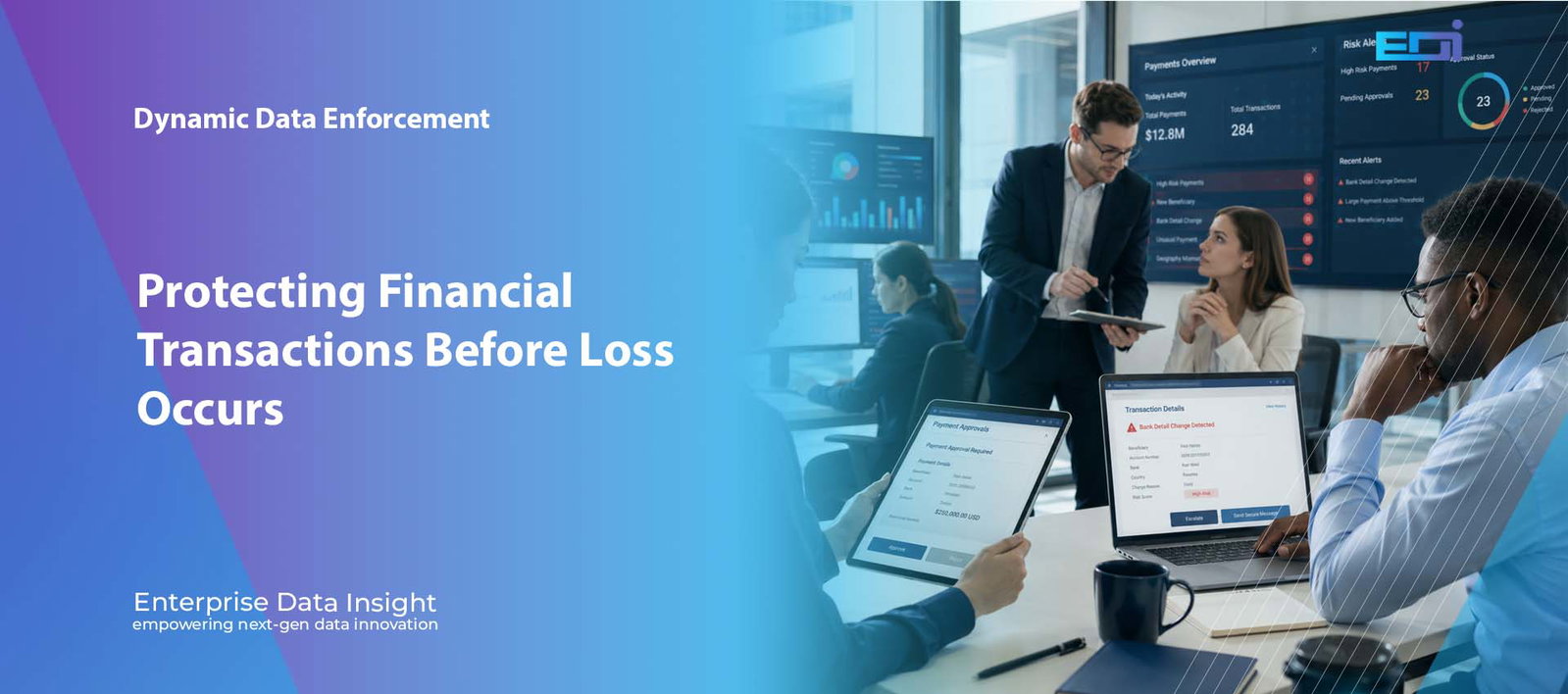
Protecting Financial Transactions Before Loss Occurs
SAP finance security should place the finance user at the centre of every policy decision. DDE evaluates the user, role, transaction, value, beneficiary, account, device, location, time and business sequence before allowing, reviewing or blocking sensitive financial activity.
Choose the Finance Role You Want to Protect
The risks and controls change depending on the user’s responsibility. This SAP finance security experience adapts to the selected persona.
Build a Finance Transaction and Let DDE Evaluate It
Change the transaction, amount and access conditions. Then run the SAP finance security policy to see the live risk score, decision, reasons and evidence.
Configure the request
Trusted payment can proceed
The user, beneficiary, value, device, location, time and approval path match the approved treasury policy.
Explore the Finance and Treasury Risks DDE Can Control
Select a topic to see the SAP finance security risk, the context DDE evaluates and the preventive action it can apply.
Vendor Bank Account Changes
A vendor bank change may be legitimate, but it becomes high risk when it occurs from an unusual device, outside normal hours or shortly before an urgent payment.
Where DDE Stops the Financial Loss Chain
Traditional monitoring may detect the issue after posting or payment. SAP finance security with DDE places the decision before the damaging step.
Why SAP Finance Security Must Be Context-Aware
SAP finance security must address valid users performing legitimate transactions in an unsafe combination of circumstances.
Valid Access Does Not Always Mean Safe Activity
A finance user may be correctly authorised to maintain a vendor, post a journal or approve a payment. The risk appears when the action falls outside the expected business context, value, device, location, time or approval sequence.
SAP finance security therefore needs to understand the difference between a valid identity and a safe financial action.
DDE Evaluates the Complete Finance Context
- User identity, role, company code and organisational scope
- Transaction, account, beneficiary, value and currency
- Device, IP address, location, time and session behaviour
- Previous bank, payment-term, credit or pricing changes
- Preparer, approver and preventive SoD conditions
Preventive SoD at the Moment of Action
Traditional SoD reporting may identify role conflicts after access has been granted. DDE can prevent the same user from creating and approving the same transaction, changing a beneficiary and releasing payment, or combining privileged activities into one high-risk sequence.
Protect Sensitive Finance Data Without Blocking Work
DDE can mask payroll, bank, salary or account information when full visibility is not required. This lets users continue the business process while reducing unnecessary exposure to sensitive financial data.
Allow Trusted Activity and Challenge Risk
Context-aware SAP finance security does not need to block every high-value transaction. A legitimate payment can continue when the beneficiary, user, device, time and approval route meet policy. Stronger controls are applied only when risk rises.
Build an Investigation-Ready Evidence Layer
Every SAP finance security policy decision can record the user, transaction, value, old and new data, device, location, time, related activity, policy result and preventive action. This gives finance, security and audit teams one consistent evidence layer.
“The strongest financial control is the one that prevents an unsafe transaction before it becomes a payment, posting or loss.”
Finance and Treasury Controls with DDE
Bring Preventive Control into Finance and Treasury
Explore how DDE can protect bank changes, payments, manual journals, credit exposure, sensitive reports and privileged financial activity before loss occurs.