


Workflow Approval for Secure RFC Connection Management in SAP DDR
Workflow Approval for Secure RFC Connection Management in Dynamic Data Replicator
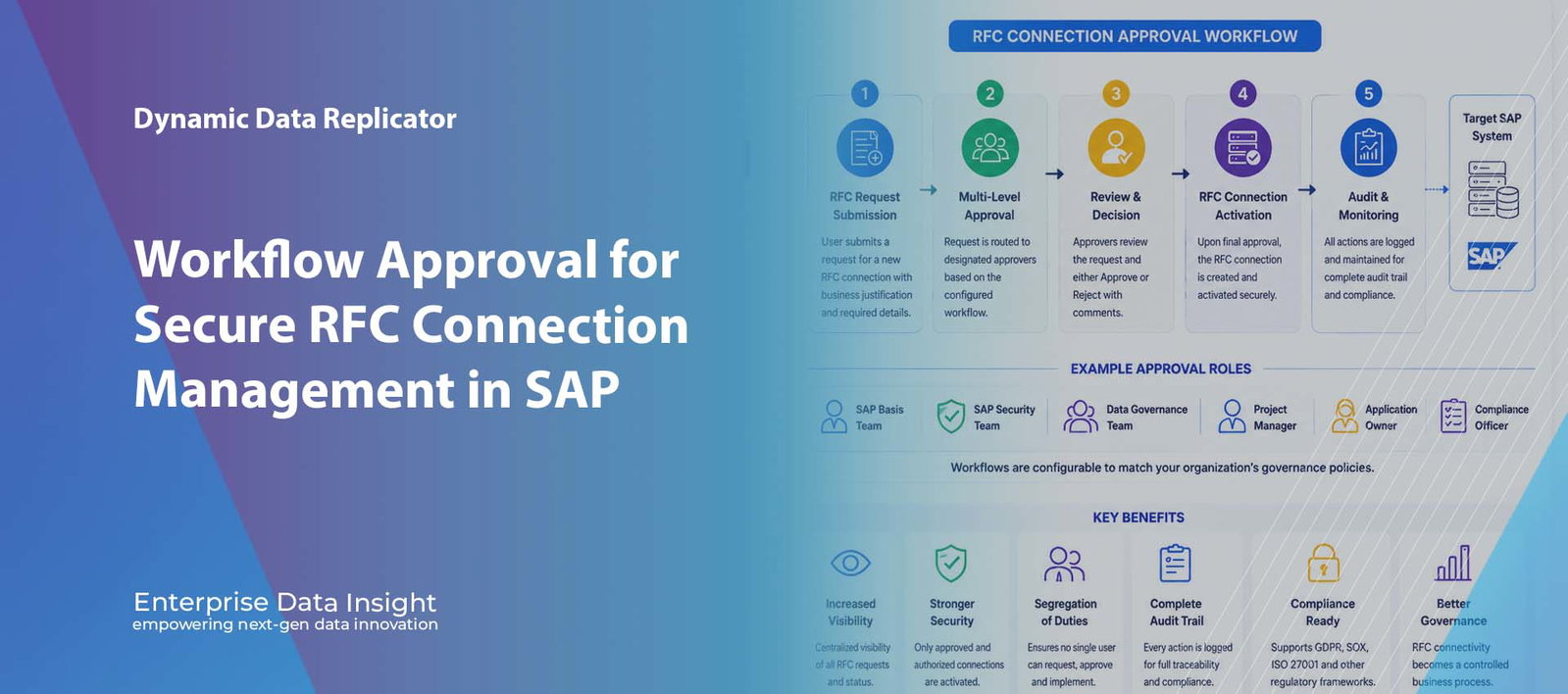
Workflow Approval for Secure RFC Connection management is now available in Dynamic Data Replicator, giving SAP teams a controlled and auditable way to request, approve, reject, document, and activate RFC connectivity. Instead of allowing technical connections to be created informally, DDR introduces approval governance, segregation of duties, compliance visibility, and complete audit traceability before SAP data replication activity begins.
What this solves technically
DDR Workflow Approval turns RFC setup into a governed business process, helping organisations reduce unauthorised access risk and improve audit readiness.
Workflow Approval for Secure RFC Connection management is becoming increasingly important for SAP organisations that rely on RFC connectivity for replication, migration, integration, and system refresh activity. Remote Function Call connections are often the technical foundation used to access and move data between SAP systems. When these connections are created without formal governance, organisations can face avoidable security, compliance, and audit risks.
Why RFC Governance Matters More Than Ever
RFC connections are used across many SAP activities, including selective data transfers, SAP ECC to SAP S/4HANA migration, non production refresh, test data provisioning, data transformation, and integration between SAP environments. Once created, an RFC connection can provide access to significant volumes of business critical and sensitive information.
In many organisations, the process is still too informal. A user requests a connection, a technical administrator creates it, and the connection becomes available with limited documentation or approval history. This creates a gap between technical execution and business governance.
- limited visibility into who requested RFC connectivity
- weak approval controls before a connection is activated
- difficulty demonstrating compliance during internal or external audits
- increased risk of unauthorised access to sensitive SAP data
- insufficient segregation of duties between request, approval, and activation
- lack of documented business justification for data movement access
RFC connectivity should not be treated as a simple technical configuration. It is a security gateway into SAP data and should be governed with approval, accountability, and audit evidence.
What Is DDR Workflow Approval?
DDR Workflow Approval introduces a controlled governance process for creating and managing RFC connections used within Dynamic Data Replicator. Rather than allowing RFC connections to be created and activated immediately, organisations can enforce approval workflows before connectivity is established.
Every RFC request can be submitted, reviewed, approved, rejected, documented, and audited. This creates a secure and transparent operating model for SAP connectivity.
- users submit RFC requests directly through DDR
- approvers review the business justification and technical scope
- approval stages can reflect internal SAP governance policies
- connections are only activated after the required approval process is complete
- all workflow activity is recorded for audit and compliance review
RFC Request Submission
DDR allows users to submit requests for new RFC connections through a structured process. Instead of relying on informal emails, tickets, or undocumented conversations, the request captures the information needed to assess whether the connection is appropriate.
Each RFC request can capture:
- source SAP system
- target SAP system
- business justification
- requestor information
- required access level
- environment details
- additional comments or supporting information
This ensures every Secure RFC Connection request has a documented business purpose before any technical activation takes place.
Multi Level Approval Workflows
DDR supports configurable approval workflows that can be aligned with each organisation’s governance model. A simple project may require one approval stage, while a sensitive data movement process may require multiple levels of review.
Approval paths may include:
- SAP Basis Team
- SAP Security Team
- Data Governance Team
- Project Manager
- Application Owner
- Compliance Officer
Why approval matters
- formalises RFC access decisions
- reduces unauthorised connectivity
- documents business need and ownership
- supports compliance evidence on demand
Who benefits
- SAP Basis and technical teams
- SAP Security and GRC teams
- data protection and compliance teams
- internal and external audit teams
Segregation of Duties for Secure RFC Connection Control
Segregation of duties is a critical control in secure SAP system management. DDR Workflow Approval helps ensure that the person requesting connectivity is not the same person approving the request, and that administrators cannot bypass the required approval route.
The workflow can help organisations enforce:
- requestors cannot approve their own RFC connection requests
- administrators cannot bypass workflow controls without traceability
- security teams retain oversight of access related decisions
- audit teams can review request, approval, rejection, and activation history
This reduces operational risk and supports stronger SAP governance across replication, migration, and refresh activity.
Complete Audit Trail and RFC Traceability
Every action within DDR Workflow Approval is recorded automatically. This gives organisations a clear audit history for each RFC request and helps demonstrate that connectivity was reviewed and approved before it became active.
DDR maintains audit history for:
- who submitted the RFC request
- when the request was created
- approval and rejection actions
- comments entered during review
- RFC activation dates
- changes made to the connection
- user identification details
Where DDR Workflow Approval creates measurable value
The value of Workflow Approval for Secure RFC Connection management comes from combining technical control with business governance, security oversight, and audit readiness.
Security and Compliance Benefits
Modern compliance frameworks require organisations to demonstrate control over system access, privileged activity, and data movement. DDR Workflow Approval supports these requirements by making RFC connectivity part of a formal governance process rather than an informal technical activity.
The framework can support governance initiatives relating to:
- GDPR and data protection policies
- SOX compliance
- ISO 27001 control expectations
- internal audit requirements
- cyber security frameworks
- SAP security and access governance
By controlling how RFC connections are requested and established, organisations can reduce security risk while improving compliance readiness.
Why This Matters for SAP Data Replication
SAP data replication projects often involve moving large volumes of information between systems. Without formal RFC governance, organisations may struggle to demonstrate that the connectivity used for this movement was properly authorised, reviewed, and monitored.
DDR Workflow Approval supports secure connectivity for:
- SAP ECC to SAP S/4HANA migrations
- test data provisioning
- client refresh activities
- data archiving projects
- carve out programmes
- data transformation initiatives
- non production environment creation
For these use cases, secure data replication starts before the first record is transferred. It starts with governed connectivity.
Benefits for Audit and Security Teams
Security and audit teams gain a stronger view of RFC activity when requests, approvals, and activations are managed through DDR. Instead of reconstructing decisions from emails or fragmented tickets, teams can review a centralised history of the workflow.
- Increased visibility: all RFC requests are centralised and easier to review.
- Improved accountability: every decision is recorded and traceable.
- Reduced risk: unauthorised connections cannot be activated without approval.
- Stronger compliance: audit evidence is available when required.
- Better governance: RFC connectivity becomes a controlled business process.
Secure data replication starts with secure connectivity, and secure connectivity starts with controlled approval.
Enterprise Grade Governance for Modern SAP Landscapes
As SAP environments become more interconnected, organisations need stronger control over how systems communicate and exchange data. RFC connectivity should no longer be treated as a background technical setting. It represents a critical security gateway that requires governance, approval, accountability, and auditability.
The new DDR Workflow Approval framework enables organisations to establish secure, compliant, and controlled RFC management processes while maintaining the flexibility required for complex SAP projects.
By combining workflow driven approvals, segregation of duties, comprehensive audit logging, and governance controls, Dynamic Data Replicator helps organisations reduce risk and strengthen confidence in their SAP data replication activities.
For broader context, explore Dynamic Data Replicator, review Dynamic Data Masking, and learn more about SAP enterprise systems.
Learn More
Discover how Dynamic Data Replicator can help your organisation implement secure, governed, and auditable SAP data replication processes while supporting migration, transformation, refresh, and compliance initiatives.
Contact Enterprise Data Insight to arrange a demonstration of DDR Workflow Approval and Secure RFC Connection governance capabilities.