


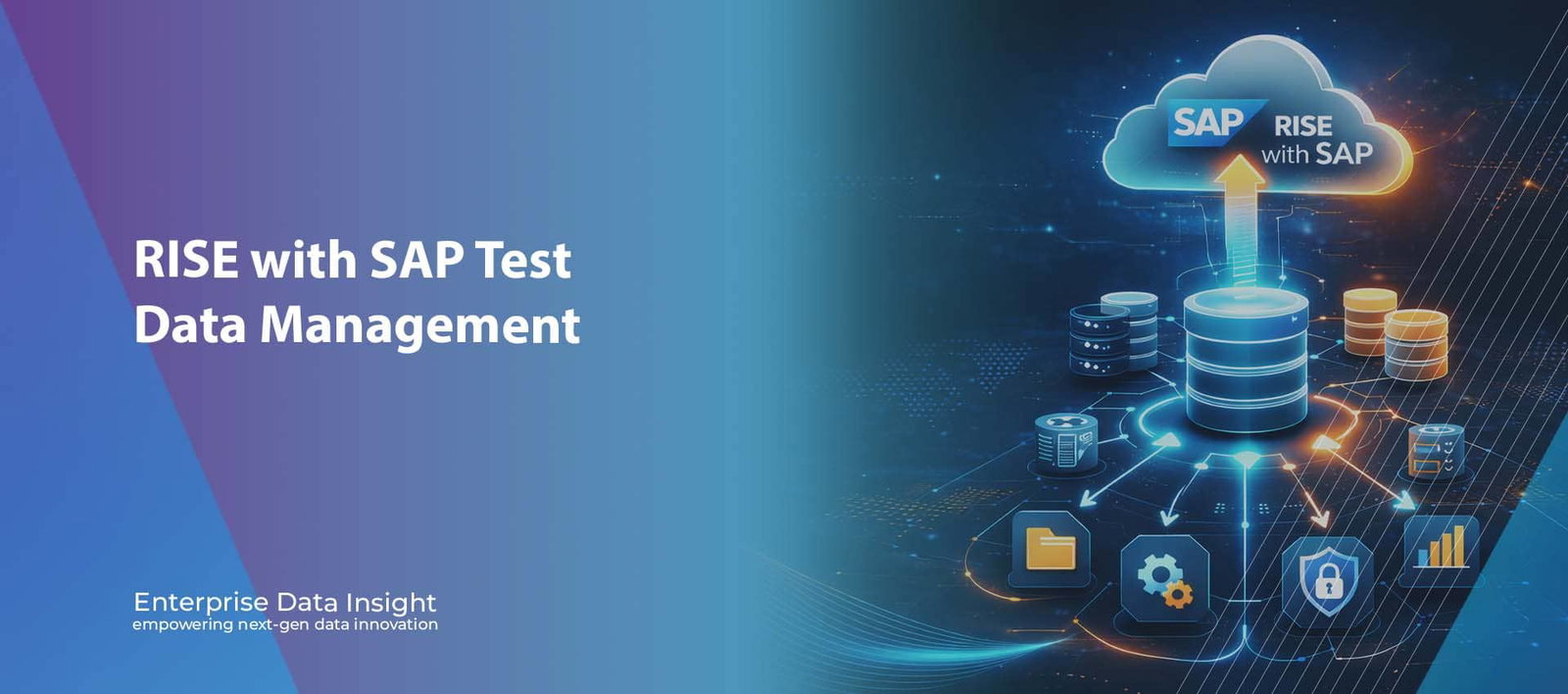
RISE with SAP Test Data Management: 7 Powerful Strategies Replacing Full System Copies
Why SAP RISE Customers Need a Different Approach to Test Data Management
RISE with SAP Test Data Management is becoming a critical topic as organisations move away from traditional on premise infrastructure and into managed cloud environments. While this shift brings many advantages such as simplified operations, predictable infrastructure and accelerated digital transformation, it also changes how organisations must approach test data management. Many organisations migrating to RISE discover that the traditional methods they relied on for years, particularly full SAP system copies, are no longer practical or efficient.

The Traditional Approach No Longer Works
Historically, SAP teams refreshed development and quality systems using full production system copies. This ensured data consistency across environments and provided realistic datasets for testing and development.
However, this approach creates several challenges in a RISE environment.
First, storage consumption becomes a major cost factor. Cloud infrastructure is billed based on resource usage, including compute power, storage and memory. Maintaining several full size copies of a multi terabyte SAP production system quickly increases operational costs.
For example, if a production database is 8 TB, copying this system into development, QA and training environments could easily result in 24 TB or more of duplicated data. In a traditional on premise environment this may have been manageable, but in a cloud subscription model the costs quickly become visible.
Second, system copies in RISE environments are often controlled and restricted operations. Customers cannot always perform deep system level operations in the same way they would on their own infrastructure. System copies may require coordination with SAP operations teams and can involve longer lead times.
This introduces operational friction and slows down development and testing cycles.
In a managed cloud model, RISE with SAP Test Data Management needs to move away from full system copy thinking and towards a more intelligent, selective and cost aware data strategy.
Modern RISE with SAP Test Data Management Architecture
As organisations modernise their SAP environments, test data strategies must evolve as well. Instead of copying entire systems, organisations need a more flexible approach that focuses on selective data replication, data subsetting and controlled refresh processes.
This approach enables teams to replicate only the data they actually need for testing or development scenarios.
DDR enables targeted business object replication rather than full SAP system copies, which is critical for RISE with SAP Test Data Management.
Receives only the required data for development rather than a full production sized clone.
Supports realistic testing while reducing unnecessary storage and refresh overhead.
Ideal for project streams that need selected business scenarios without full environment duplication.
The Need for a More Intelligent Approach
Instead of refreshing a full system, organisations can replicate specific business objects such as sales orders, materials or customers, data related to a particular company code or plant, time based transactional data such as the last 12 or 24 months, and selected data sets required for specific project testing.
This significantly reduces the volume of data moved between systems while maintaining functional integrity.
The Role of Dynamic Data Replicator (DDR)
This is where Dynamic Data Replicator is becoming increasingly important for organisations running SAP in RISE environments. DDR provides a modern approach to RISE with SAP Test Data Management by enabling selective and controlled replication of SAP business data between systems. Instead of performing full system copies, DDR allows organisations to replicate targeted data sets directly from production into non production environments.
From a technical perspective, DDR understands SAP business object relationships and ensures that all dependent tables and related data are transferred correctly. This preserves data integrity while significantly reducing the volume of data required.
DDR also supports data protection and compliance by enabling sensitive information such as HR, financial or customer data to be scrambled during replication. This is particularly important when production data is used in development or testing systems.
DDR helps RISE customers overcome large system copy limitations by enabling targeted replication, protecting sensitive data and reducing cloud infrastructure consumption across non production landscapes.
Real Technical Benefits for RISE Customers
For organisations operating within RISE environments, the benefits of this approach are substantial.
- reduced infrastructure footprint by avoiding full system duplication
- faster environment refresh cycles through targeted replication
- improved project agility by providing exact data sets when needed
- better cost control in cloud environments through smaller database footprints
- improved data security through scrambling and masking during replication
Key Challenges DDR Helps Overcome
Customers operating in RISE environments often face constraints that were less significant in traditional on premise SAP estates.
- system copies may require managed service coordination
- cloud storage and compute are directly linked to operational cost
- full environment refreshes introduce longer lead times
- project teams struggle to get targeted data quickly
- sensitive production data requires stronger control in non production systems
DDR addresses these challenges by enabling selective, controlled and technically consistent replication of SAP business data.
The Future of RISE with SAP Test Data Management
As more organisations adopt RISE with SAP, it is becoming clear that traditional test data management strategies must evolve.
The focus is shifting away from copying entire systems and towards delivering the right data in a controlled, efficient and secure way.
Solutions such as Dynamic Data Replicator enable organisations to modernise their SAP data management strategy, supporting faster projects, lower infrastructure consumption and greater flexibility across development and testing environments.
Conclusion: Why RISE with SAP Test Data Management Must Change
In a cloud driven SAP landscape, smarter data management is no longer optional.
It is essential.
RISE with SAP Test Data Management requires a different model from the traditional full system copy approach. By adopting selective replication and using solutions such as DDR, organisations can reduce cloud footprint, improve refresh speed, protect sensitive information and create more agile SAP delivery environments.
For practical demonstrations of selective replication and DDR, visit the Enterprise Data Insight YouTube channel.